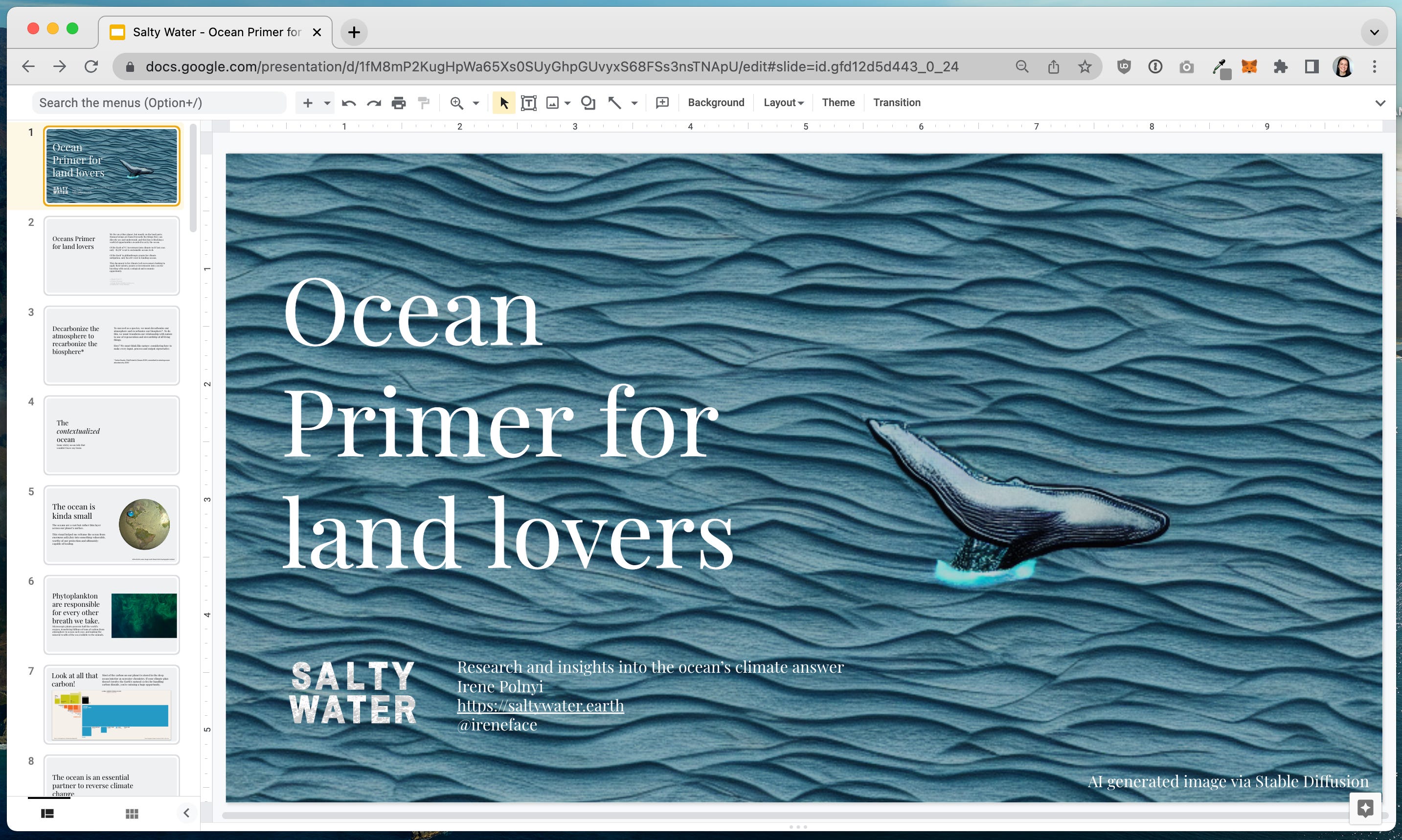
Ocean Primer for Land Lovers
Originally published on Substack
In my first post I wrote about how we live on a water planet, but mostly on the land parts. Human beings are biased towards the things they can directly see and understand, and this bias is blocking a world of climate change opportunities awarded to us by the ocean.
I'm writing this Ocean Primer for Land Lovers to help everyday climate newcomers, philanthropists and stewards of private capital to more confidently explore the ocean's solutions to our climate. To do this I share some of the memorable things I have learned that helped me understand the ocean's unique role in climate, intuitively organize different classes of ideas, and provide lots of examples of real technologies and companies that are executing on them today.
Understanding the Ocean
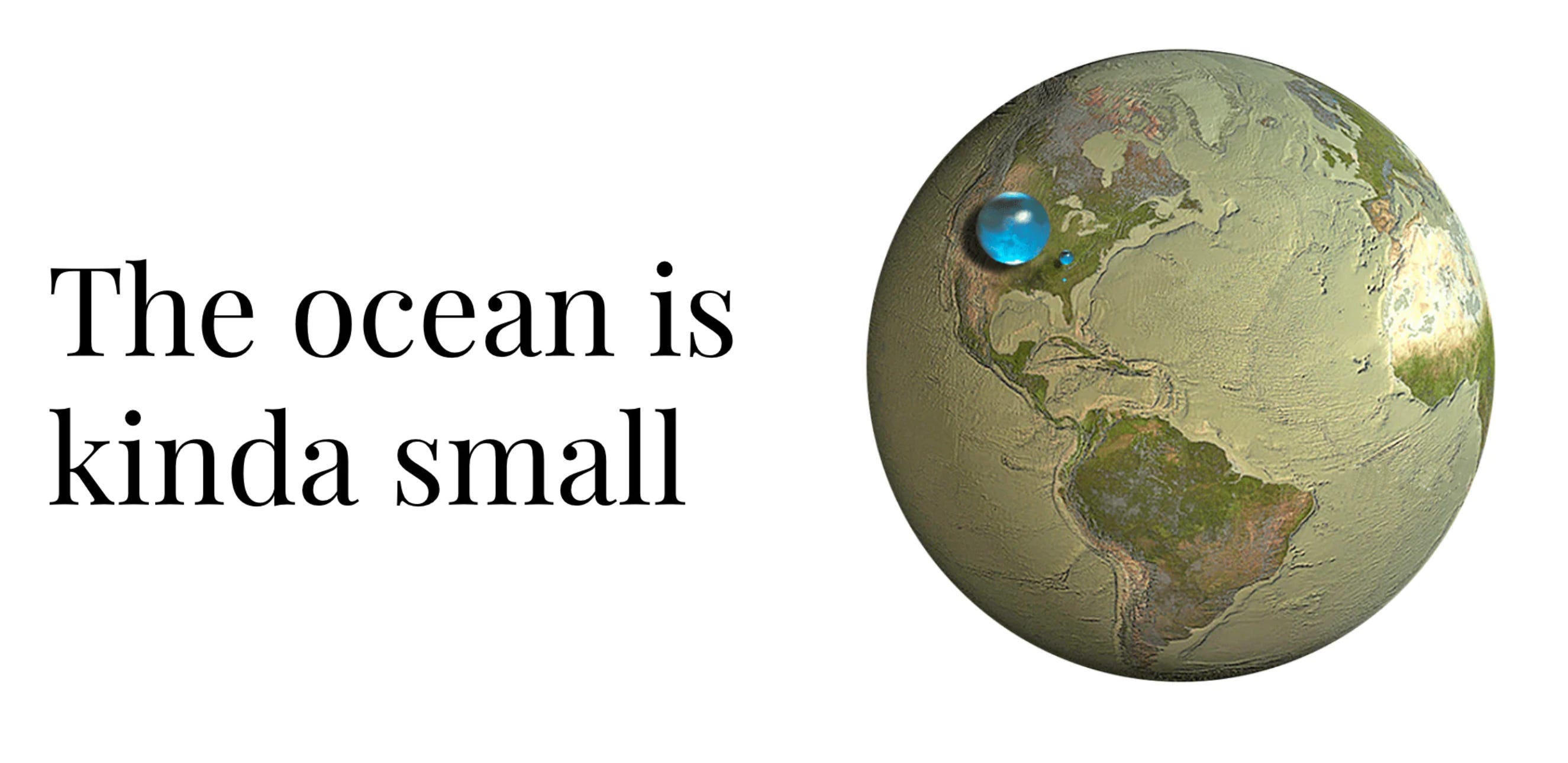
This visual helped me reframe the ocean from enormous salty fury into something vulnerable, worthy of our protection, and ultimately: capable of healing.
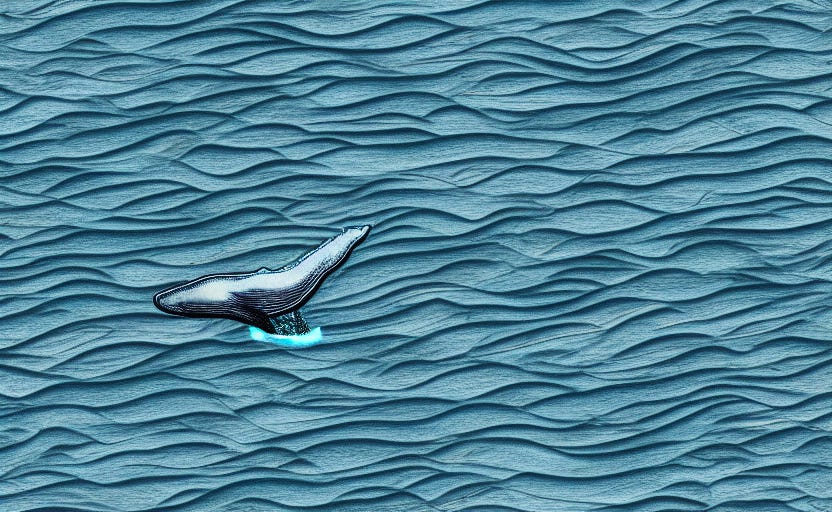
Microscopic plants called phytoplankton transfer billions of tons of carbon from atmosphere to ocean each year, making the mineral wealth of the sea available to the animals. When they die, the lime and silica remains of the ocean's creatures drift in an endless snowfall to the ocean floor and layer by tiny layer, create sediments as deep as 12,000 ft.
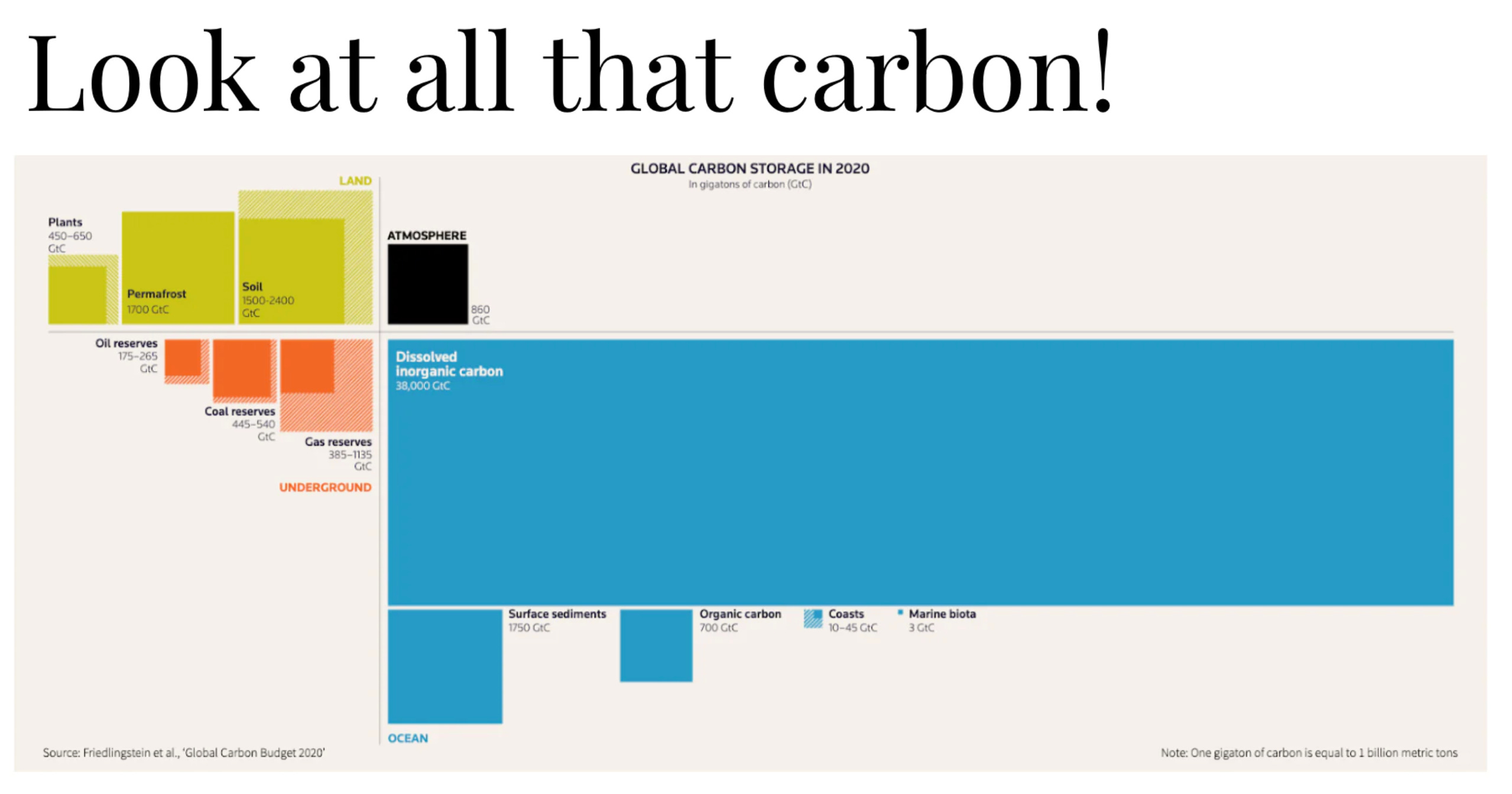
Most of the carbon on our planet is stored in the deep ocean interior as seawater chemistry. If your climate plan doesn't involve the Earth's natural cycles for handling carbon dioxide, you're missing a huge opportunity.
Three Big Pressures on Ocean Health

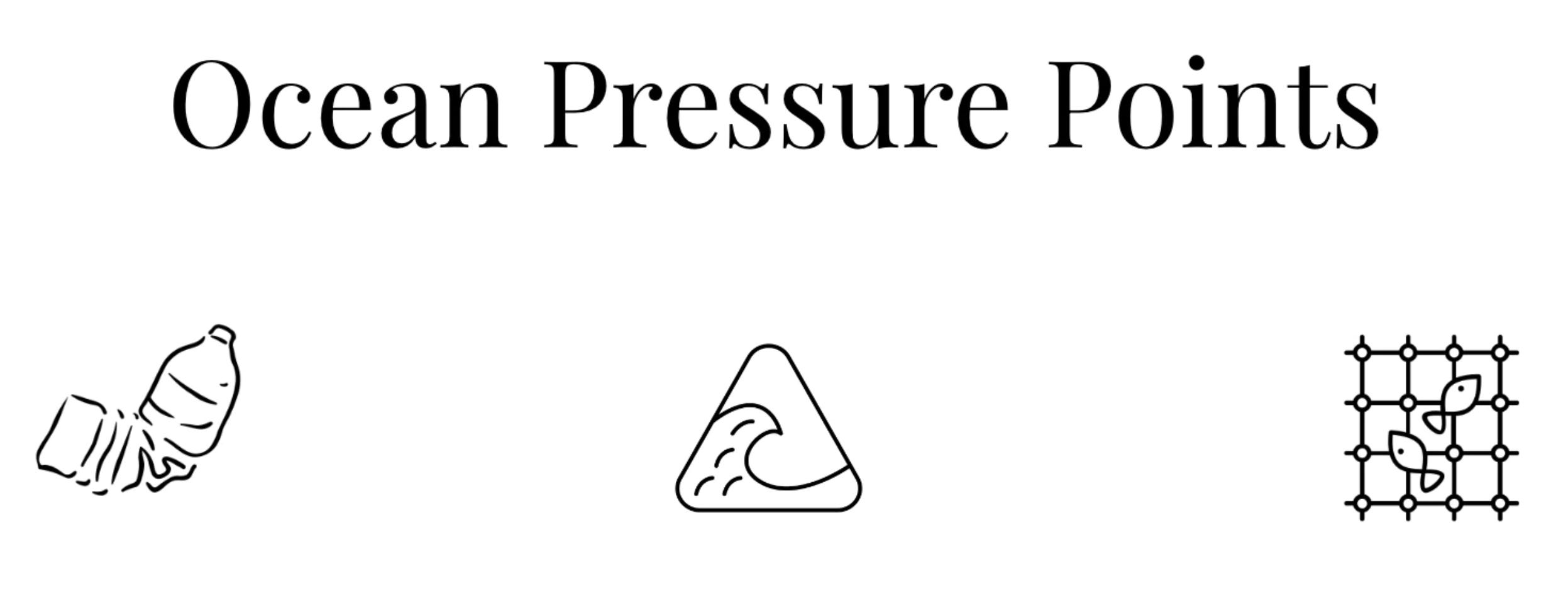
The ocean is an essential partner to reverse climate change, but to learn how, it's useful to understand why people are worried about its health. Human activity interrupts delicate ecosystems, creating three big points of pressure:
Pressure 1: Marine Pollution
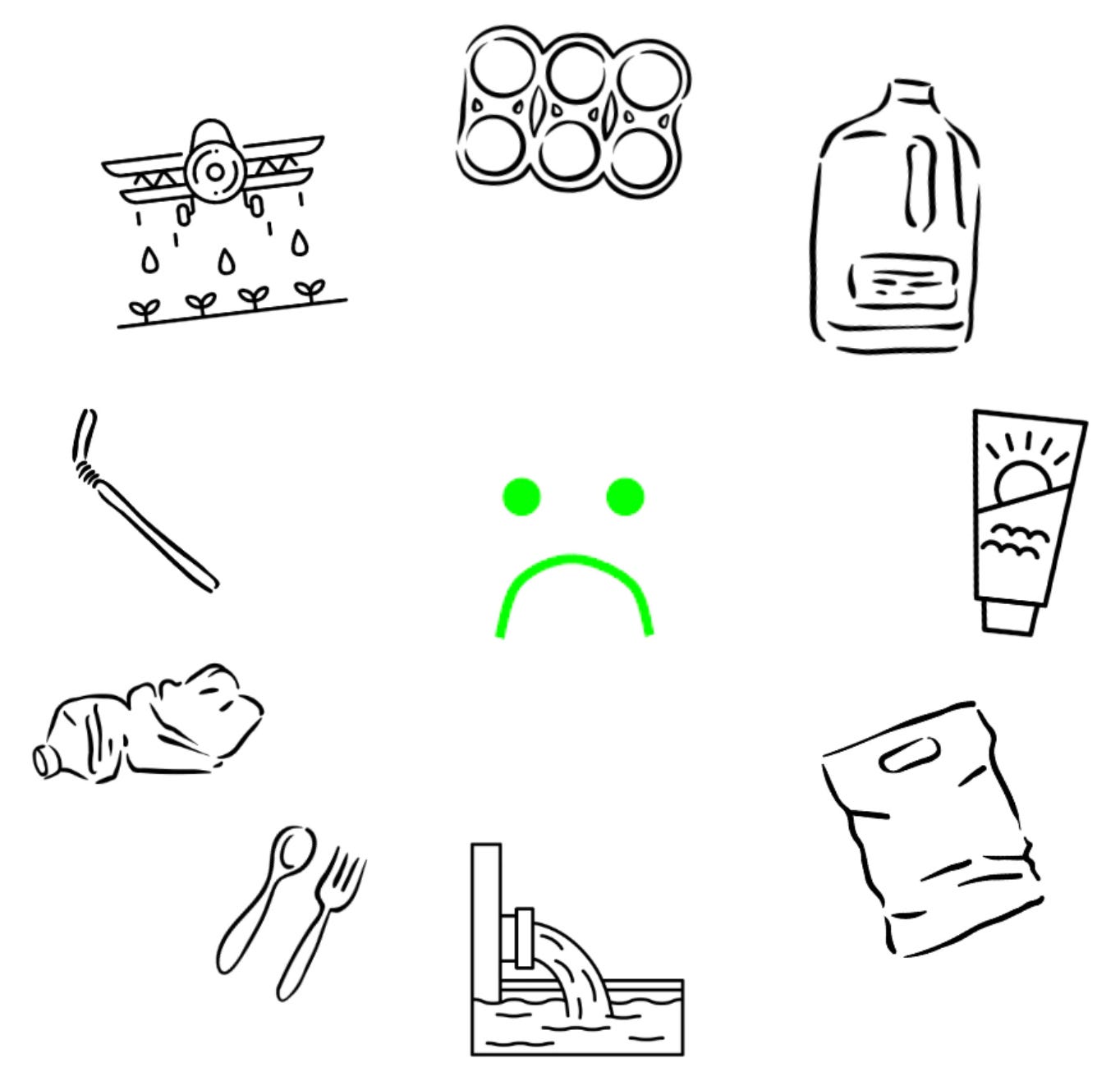
Scientists believe chemical and plastic pollution is responsible for the loss of half of all marine life. Fewer marine plants means less photosynthesis and oxygen for the planet, and fewer animals that depend on them for food.
Agriculture run off, industrial and consumer chemicals can be devastating even in small quantities, yet 80% of all wastewater is still untreated.
Poisonous plastics break down and enter the food chain, in some cases even being preferred by corals over real food.
Pressure 2: Acidification
In geologic timescales (meaning, earth time) the ocean would solve climate change on its own. But too much CO2 drops the pH of the ocean, what is referred to as acidification.
Acidification is dangerous because it targets the base of the ocean food pyramid. It starves tiny plants and animals of the carbonic ions they need to survive, creating a cascading effect on other marine life and opening the door for growing toxic bacteria.
Pressure 3: Overfishing
Fishing too much and in the wrong way is creating what's called a biodiversity crisis in the ocean. When humans fish too high up the food chain, it has far reaching consequences referred to as the trophic cascade, a collapse in deeply connected ecosystems.
According to the Global Oceanic Environmental Survey, the ocean could sequester twice as much carbon if marine life was rebuilt: 6 Gt/year, instead of today's 3 Gt/year.
Solutions Framework

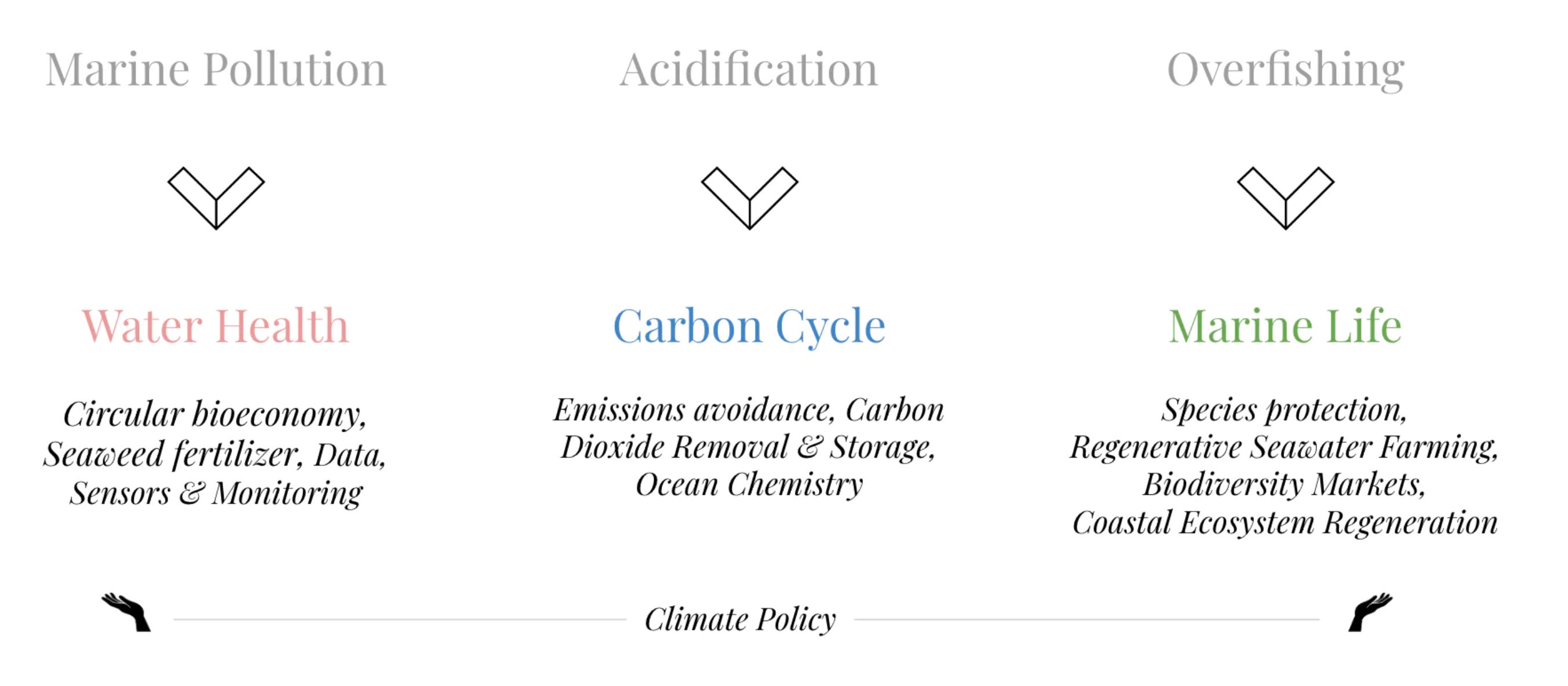
Like most climate problems, we have many good ideas for how to address these challenges. We can divert pollution with plastic and chemical alternatives and closely monitor our ocean's health. We can reduce carbon emissions with renewable ocean energy and extract CO2 from air and ocean with a dozen new methods. We can protect species and Rebuild Marine Life by restoring natural habitats and sustainably managing fish stocks. We can do it all and rewrite our future.
Section 1: Carbon Cycle

Carbon is great, actually, and forms the basis of all life on Earth. The dangers come when it ends up where it doesn't belong - like moving from stable geological storage in the form of oil or coal or gas, and into our atmosphere in the form of CO2.
Today, carbon dioxide is flowing into our atmosphere twice as fast as natural carbon sinks are able to absorb it. We can reduce the pressure the ocean faces from acidification by directly addressing the overabundance of carbon dioxide. We can do this by stopping the flow of CO2 into the atmosphere with renewable ocean energy, like offshore wind. We can also invest in ideas that drawdown CO2 from air or ocean, and help us come back from the brink.
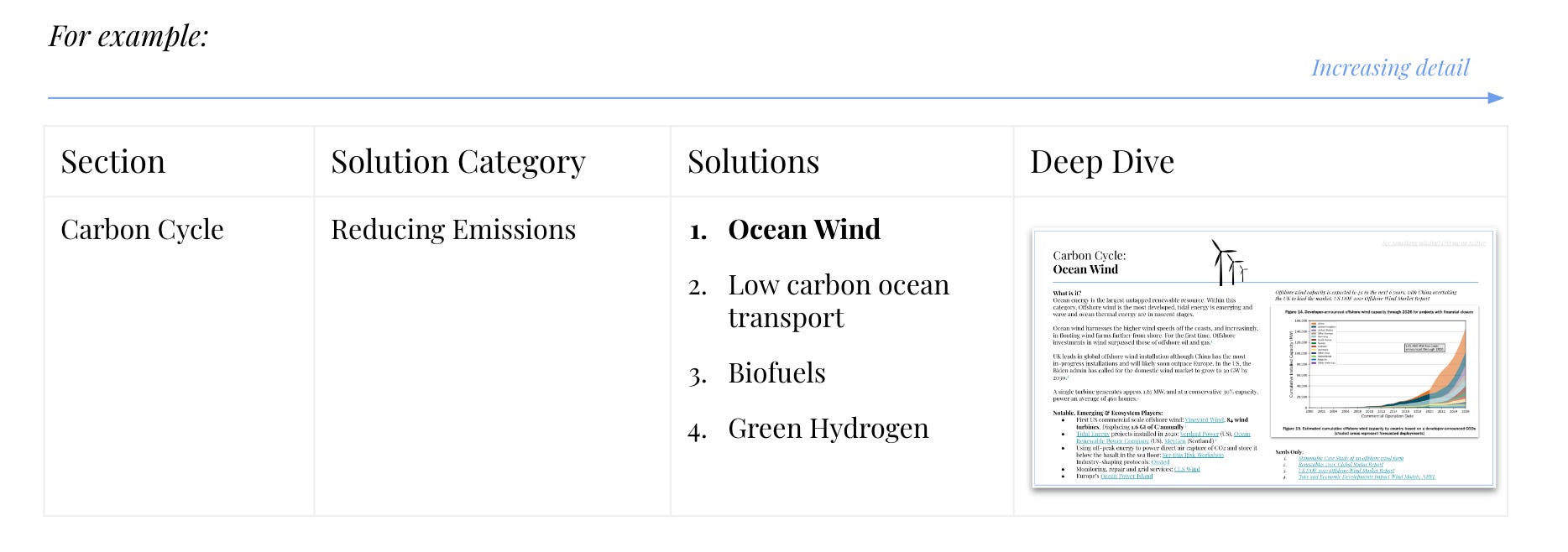
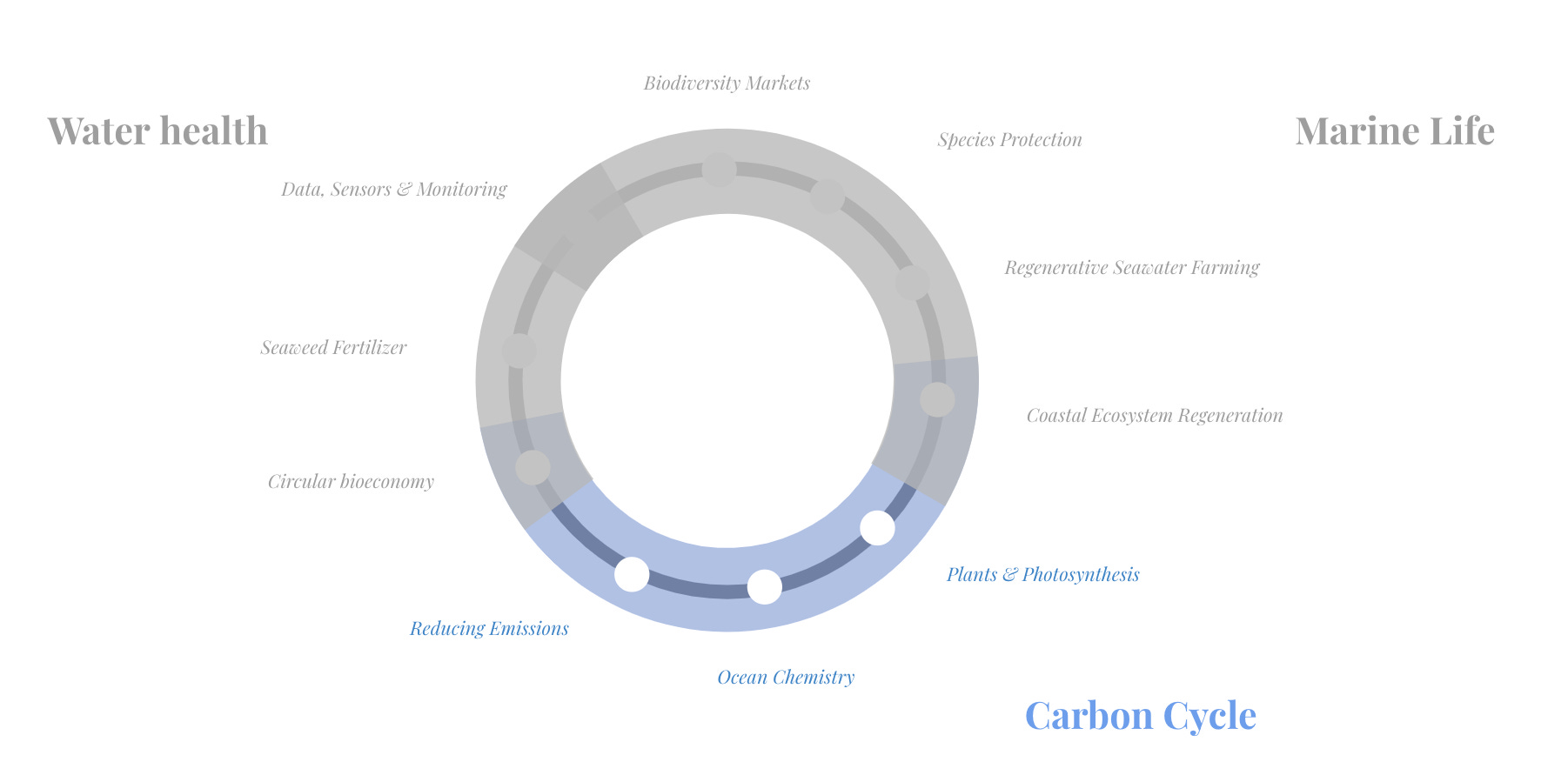
Reducing Emissions
- Ocean Wind
- Low carbon ocean transport
- Biofuels
- Green Hydrogen
Ocean Chemistry
- Ocean Alkalinity Enhancement
- Olivine Weathering
- Basalt Carbon Storage
Plants & Photosynthesis
- Microalgae carbon farming (+ iron seeding, artificial upwelling)
- Seaweed carbon farming
What's Next?
Forthcoming sections include:
- Marine Life: powerful methods that sequester carbon while rebuilding thriving, abundant ecosystems
- Water Health: technologies helping to displace plastic and contaminants
- Climate Policy: a breakdown of successful climate policy around the world
- Regenerative Ocean Business Strategies: building business through ecological regeneration
Would you like to be a coauthor? Please get in touch: irenepolnyi@gmail.com