The coasts are open for windy business.
Renewable ocean energy diverts would-be CO2 from the skies
Originally published on Substack
If you've lived a comfortable life in the developed world, you may have grown up not thinking too much about power and energy. In the US, most of our electric power continues to come from natural gas (38%), followed by nearly equivalent pie slices from coal (~22%), nuclear (19%) and renewables (20%). But no matter the source of energy, most of it is wasted along the way, about 56%.
To meet our net zero goals, we need to keep fossil fuels in the ground and transition as quickly as we can to renewable sources of energy. Solar is famous for its steep reduction in costs, driven by early government support. Yet it's wind that has come to surprise us all, accounting for 3x the energy in the US compared to solar. Wind's impressive gains have built up a solid infrastructure that is helping speed up its extension offshore.
Ocean energy is the largest untapped renewable resource. Within this category, Offshore wind is the most developed, tidal energy is emerging and wave and ocean thermal energy are in nascent stages.
Ocean wind harnesses the higher wind speeds off the coasts, and increasingly, in floating wind farms farther from shore. For the first time, Offshore investments in wind surpassed those of offshore oil and gas.
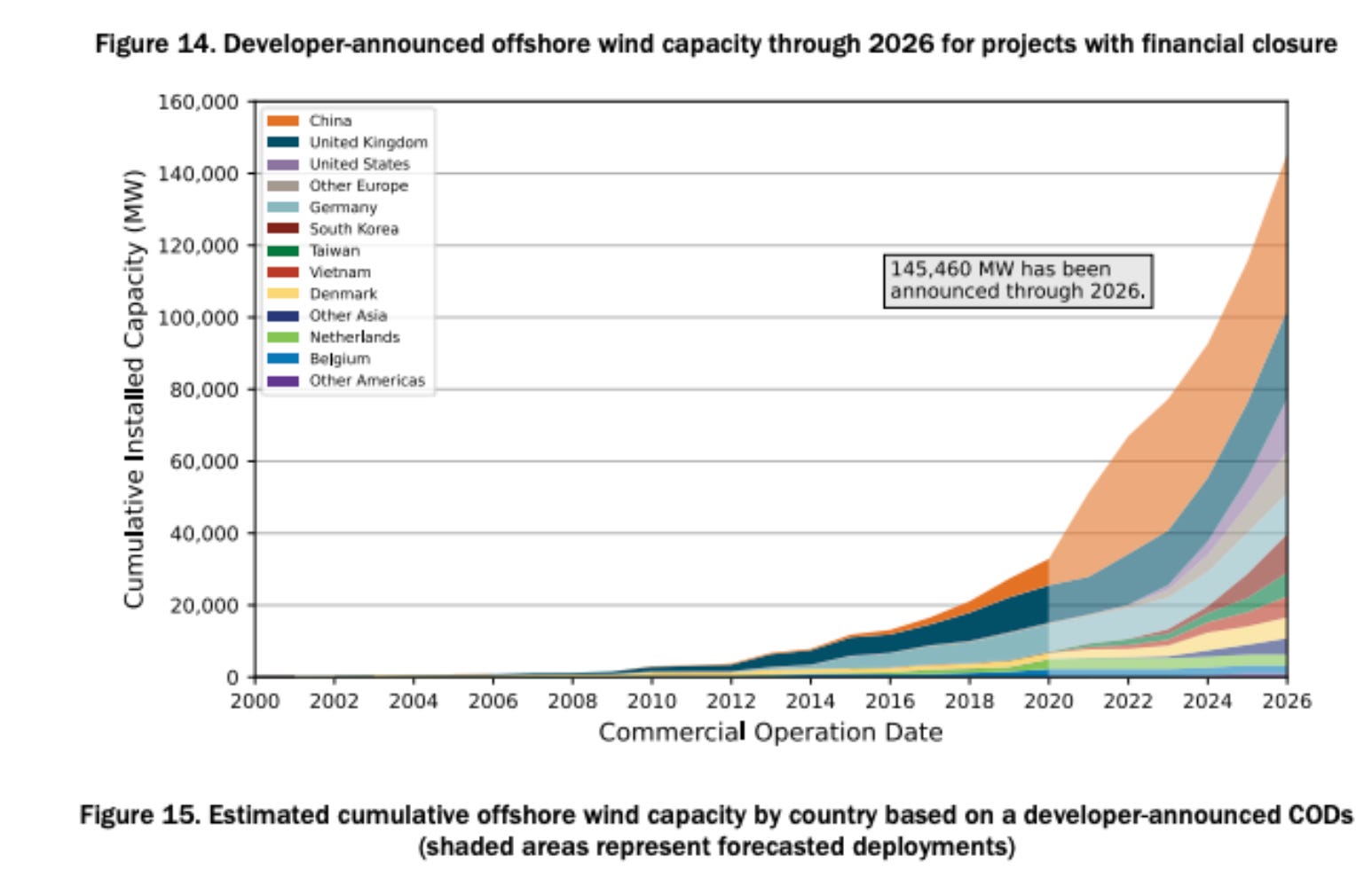
UK leads in global offshore wind installation although China has the most in-progress installations and will likely soon outpace Europe. In the US, the Biden admin has called for the domestic wind market to grow to 30 GW by 2030.
A single turbine generates approximately 1.67 MW, and at a conservative 30% capacity, power an average of 460 homes.
Notable, Emerging & Ecosystem Players
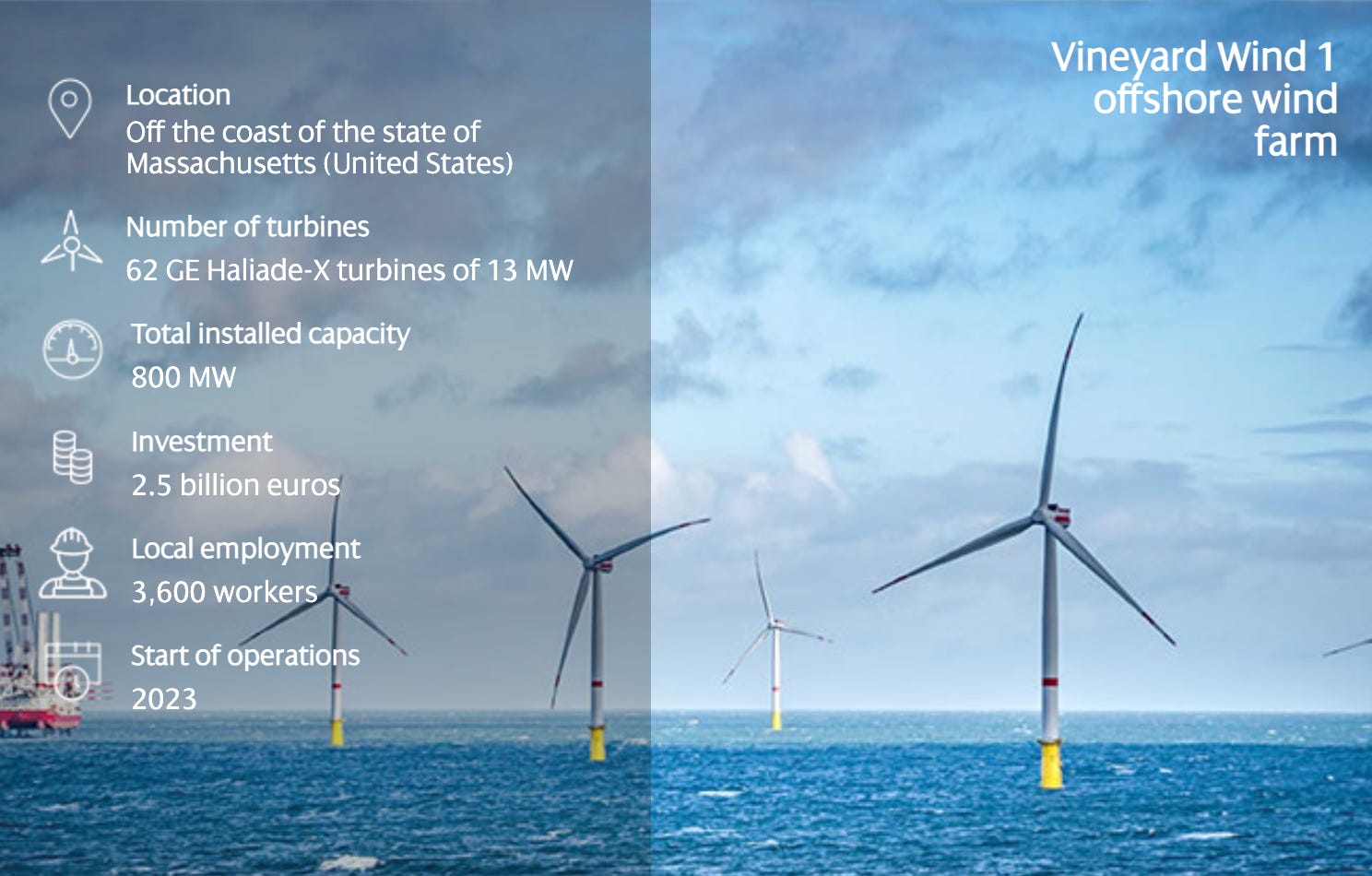
- Vineyard Wind: First US commercial scale offshore wind - 84 wind turbines, displacing 1.6 Gt of C/annually
- Tidal Energy projects (2020): Verdant Power (US), Ocean Renewable Power Company (US), MeyGen (Scotland)
- Aikido Technologies: Breakthrough Energy Fellows stealth company from Saul Griffith's OtherLab, advancing engineering for offshore wind
- Orsted: Industry-shaping protocols
- CLS Wind: Monitoring, repair and grid services
- Europe's Ocean Power Island
Implications & Analysis
Offshore wind has faced many challenges getting off the ground in the US, with several high stakes projects being killed at the last minute for not being able to manage the politics. Opposition comes from local communities on aesthetic grounds, as well as fishermen who feel their territories are being infringed upon.
With significant wind investments in UK and Germany, Europe is far ahead of the US and ready to accelerate renewable energy plans to shore up against Russian oil and gas interruptions.
While I believe a dollar will work harder to unlock powerful CDR technologies, it's impossible to ignore this mature, ocean-based renewable energy source.
Social
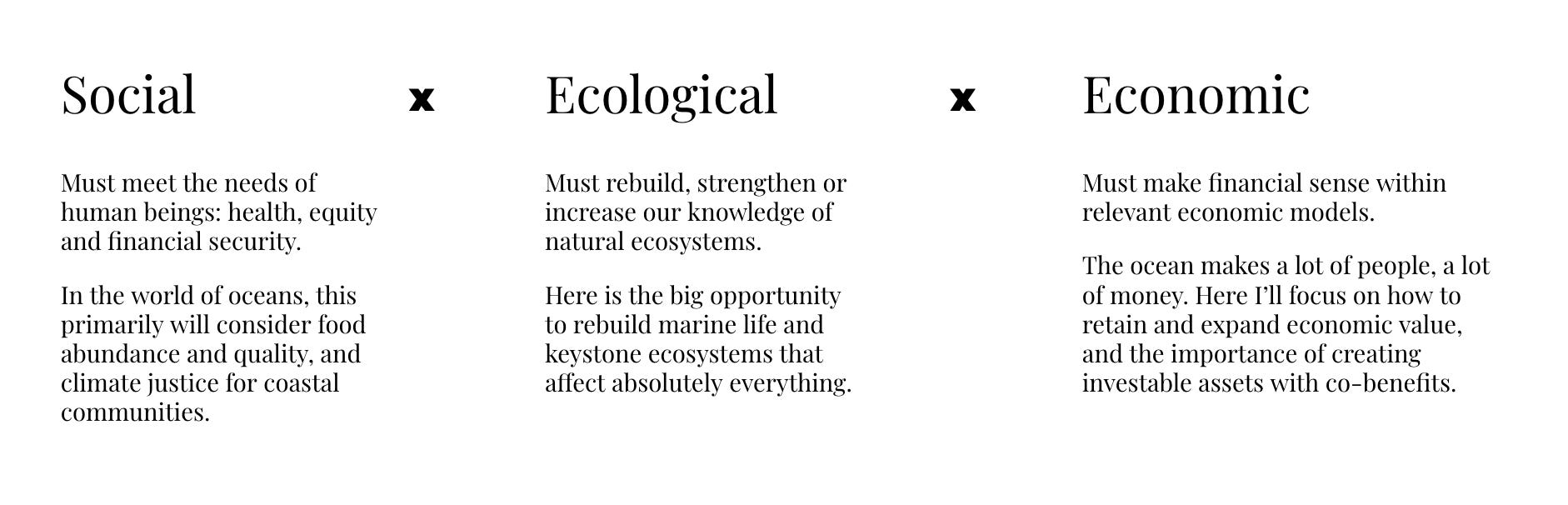
Offshore wind projects have several key social benefits. In Europe, they have been credited with revitalizing struggling port towns and in New York State, praised by environmental justice groups for bringing manufacturing and logistics jobs to a diverse waterfront community.
Ecological
Advantages:
- Plays a critical role in decarbonizing the energy sector, and offers potential for in-situ energy and permanent storage in a single site
- Wind Turbines have a ~20 yr lifespan, sparking orgs like Re-Wind to reuse these strong and lightweight materials in bridges, electrical towers and in affordable housing
- Potential to co-locate regenerative ocean farms within offshore windfarms, though early results are mixed
- Despite strong pushback from fisherman, the first wind farm in the US has recently proven to be harmless and even beneficial to local fish stock
Challenges:
- Noise pollution disturbs marine life, but has a few potential mitigation strategies: bubble curtains for noise reduction and innovation funds that monitor the impact on marine life
Economic
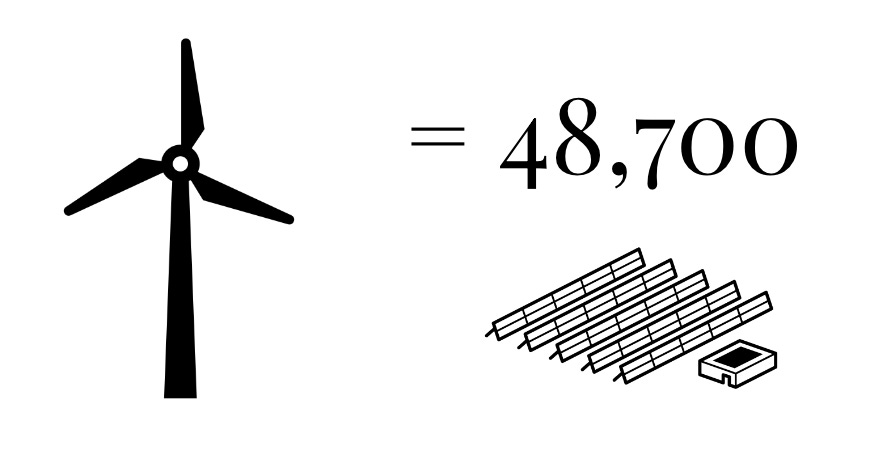
Scale: A single turbine can generate as much energy as 48,700 solar panels.
Corporate signaling: Amazon has become the largest corporate buyer of renewable energy, especially offshore wind: contracting out 250 MW of offshore wind power from Orsted in 2020 and 380 MW with Shell-HKN in 2021.
Floating turbines expand economic potential because they can be placed where winds are strongest and most consistent, regardless of seafloor topography.
Nerds Only
Deeper reading that shaped this work:
- Skimmable Case Study of an offshore wind farm
- Renewables 2021: Global Status Report
- US DOE 2021 Offshore Wind Market Report
- Jobs and Economic Developments Impact Wind Models, NREL
- Offshore Wind Provisions in the US Inflation Reduction Act